Foreign Correspondence XIV
On brainrot

Dear friends,
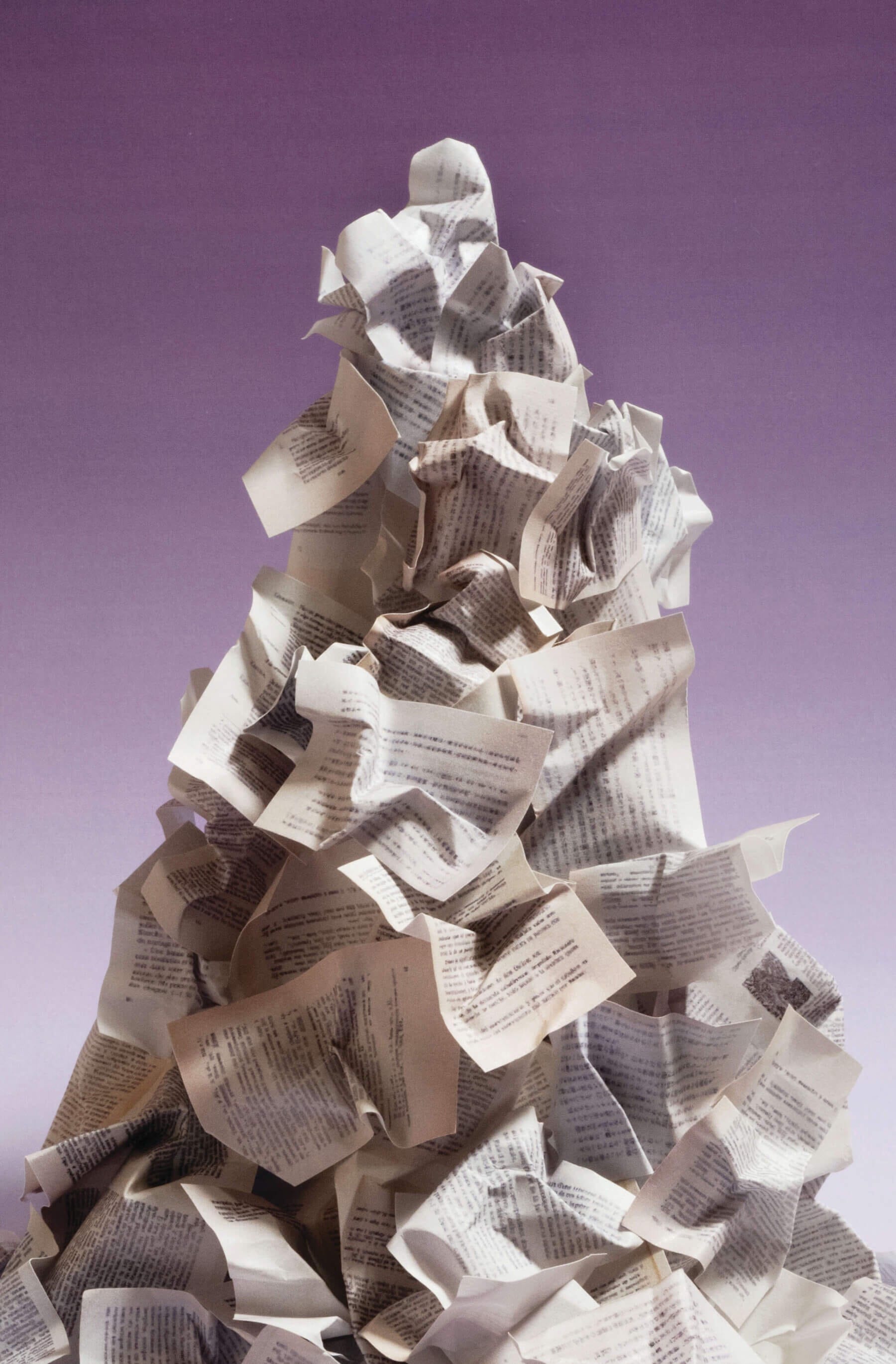
Is your brain rotting? Mine certainly is. I can feel myself getting dumber with each passing year—and not because I’m prematurely undergoing the natural (and thus inevitable) decline that is the common fate of all sad-sack eukaryotes, but because I’ve yet to find a way to resist the historical (and thus contingent) drive to stupidity that is the ruling sign of our self-lobotomizing age.
I realize that this sort of curmudgeonry is the traditional province of reactionaries. Unlike leftist critiques, which are predicated on a utopian vision of the future, complaints about the decadence of the present are grounded on nostalgic idealizations of the past. Each time we declare that the world used to be better, we express a desire to restore that betrays us as conservatives. We’d be wiser to recognize that history has been nothing but an unending catastrophe; that rather than restored the past ought to be redeemed.
Then again, there’s no denying that even reactionaries who bemoan our era’s decadence are dumber than they used to be. Our adversaries used to be people like Carl Schmitt—now we have to argue with the likes of Curtis Yarvin. Instead of Leni Riefenstahl, we have Benny Johnson; instead of Martin Heidegger, we have Jordan Peterson. The most influential contemporary interpreter of Nietzsche calls himself “Bronze Age Pervert.” Our capitalists are so dumb they think that the consequentialist banalities of “effective altruism” are the apex of ethical thinking and that Harry Potter and the Methods of Rationality is the culmination of western philosophy.
The worst part is that the intellectual decline of our enemies has not made them any less powerful and in fact may have made them more effective. Trump is far more idiotic than, I don’t know, Nixon—and yet he has managed to do far more harm than Tricky Dick. The reason seems obvious: the fascists are not the only ones getting dumber. Almost everyone is becoming increasingly stupid. How else to explain that so many regular people seem to be convinced that Elon Musk is some kind of genius?
Yet to say that dumb reactionaries are winning because people in general are getting dumber is to beg the question. Why are we becoming stupid? The answer probably has a great deal to do with technology. The use of smartphones, chatbots, and social media clearly results in an atrophy of the brain. It’s no wonder we are so invested in so-called artificial intelligence: we have lost so much of our cognitive capacity that our only hope is to outsource all thinking to glorified autocorrect software.
What’s interesting is that the technologies ruining our brains are all intimately related to language. Whether using them involves partaking in a particularly thoughtless kind of reading and writing (as is the case with Twitter and ChatGPT) or regressing to a pre-literate system of representation through images (as is the case with Instagram and Sora), the ascendancy of brain-rotting machines cannot be separated from the decline in other linguistic practices. It’s not just that we spend most of our waking hours consuming the vast troves of idiotic text and fatuous images fed to us by algorithms designed to transform our attention into a commodity, but also that we spend fewer and fewer minutes engaging with the sort of texts that could help us be less stupid.
That, at least, is what went through my head as I wrote the little piece that I’d like to share with you today. The good people at The Baffler asked me to write a brief introduction for one of the features of their most recent issue: a dossier of short essays on the decline of literature and literacy by writers from seven different countries. Since the piece is an invitation to read the rest of the magazine—and hopefully to subscribe to it as well!—I’ve decided to post the whole thing here:
BOTH IN TERMS OF ABSOLUTE NUMBERS and as a proportion of the global population, more people know how to read today than at any other moment in history. And yet if we consider literacy not as the ability to parse simple sentences but as the capacity to comprehend and enjoy complex texts, and ultimately as a sensibility that approaches the world itself as a text that requires interpretation, it’s obvious we live in an unprecedented decline of what neuroscientist Maryanne Wolf calls “deep literacy.” The manifestations of this catastrophe range from the rise of psychotic conspiracy theories to the return of state propaganda and the collapse of the public sphere. The crisis comes into view most clearly, however, in the sudden and precipitous decline of the cultural practice that first taught all of us how to read the great book of the world. There’s no point in denying it anymore: literature as we know it is well on its way to becoming a lost art.
Consider, for instance, the distressing state of reading and writing in the United States. I disagree with Philip Roth’s 2009 dictum that the novel will soon become a “cultic” concern, not because I believe that literary fiction is enjoying some sort of heyday in the core of the American empire but rather because I’m convinced that literature has always been an esoteric practice in the United States. At the time of his death, Roth was more famous than almost any living American literary writer, but that’s just a convoluted way of saying that his influence on the wider culture was insignificant. Unlike Gabriel García Márquez, he never became the voice of the nation, or indeed of the language—not for lack of talent or dedication but because the United States reserves those roles for musicians such as Bob Dylan, the only Nobel laureate in literature so far to work primarily in an oral tradition. In the decade and a half that has elapsed since Roth prophesied the retreat of the American novel into the windowless temple of a marginal sect of schismatics, literature in the United States and the English-speaking world has deteriorated at a faster rate than our warming planet. As evidence, consider a selection from the fifty works of fiction that since 2020 have appeared in Publishers Weekly’s annual list of U.S. bestsellers: Dog Man: Grime and Punishment, Dog Man: Twenty Thousand Fleas Under the Sea, Dog Man: Fetch-22, Dog Man: Mothering Heights, and Dog Man: The Scarlet Shredder. That graphic novels meant to help children learn how to read make up such a large proportion of the U.S. publishing market might suggest that most American adults lose all interest in literature as soon as they’re done with basic alphabetization.
The state of anglophone literature is so dire that thinking about the decline of American letters at this point no longer induces despair, only irritation and boredom. In an effort to shake off that ennui and to escape the grip of U.S. cultural hegemony, if only briefly, The Baffler has commissioned seven writers who work in languages other than English for dispatches on the state of postliteracy in their motherlands and mother tongues.
These correspondents’ reports are refreshing in that they are entirely free of the commonplaces with which Americans tend to explain the decline of the written word—e.g., mistaking the symptom for the illness and blaming ChatGPT for students’ plummeting reading-comprehension skills, as if people hadn’t begun to forget how to read long before Faustian Markov-chain machines became the fetish object of an apocalyptic theology—and remind us that there are more things on heaven and Earth than are dreamt of in American publishing offices, where people believe that reading literature in translation is evidence of worldly sophistication rather than the refuge of the monolingual.
But it’s my unfortunate duty to warn the reader that the essays of this dossier offer few reasons for hope. From South Korea to Sudan, China to Mexico, Morocco to the Philippines, literature seems to be in retreat. The worst part is that, while every unhappy literature is unhappy in its own way, the various dystopias that our correspondents describe seem to be converging into a single literary catastrophe. And though the causes for our common predicament that these writers offer vary wildly, it’s possible to discern a terrifying trend: the loss of deep literacy is not an organic development or an accident without an author but rather the intentional consequence of concrete actions undertaken by the unholy alliance of capital and the state, which has availed itself of technology to slowly erode our capacity to understand what we read—and therefore to imagine a more just future.
Depressing, I know. But as Gramsci taught us, despair turns us into reactionaries. It’d be naive to pretend that reading a novel or translating a poem can be a form of resistance. But who knows? Perhaps reinventing the old literary forms could help us reverse the current moment’s drive to stupidity. Better to be cultic than dumb.
If you found this even mildly interesting or entertaining, you really ought to check out the dossier. The essays are all excellent and insightful and worth your time. If nothing else, I can guarantee that they’re almost certainly less stupid than your Twitter feed!
Your Most Foreign Correspondent,
NMMP